Category Archives: Natural history

First Bath

Two Black-capped Chickadee families have been entertaining us since the young fledged about ten days ago. When they were just out of the nest, they would follow the adults to the tree by the bird feeder and sit there and beg while the parents flew to the feeder, picked up a sunflower seed, returned to the chick, and stuffed the seed in the chick’s mouth. This went on for much longer than you would think it would take for a chick to learn to feed itself, but it was entertaining to watch. For variation, occasionally the same thing would happen at the suet feeder, only this was even funnier, because the young birds would be sitting inches away while the parent moved small mouthfuls of food from feeder to chick. Eventually, after days, the young became more independent and were feeding themselves at the feeders, although they are still closely following the adults.

On Sunday I was taking a break from yard work and sitting on the deck when a new lesson began. The weather was gorgeous; the sun was out, it was in the mid-70s, and apparently the chickadees decided it was time for a bath. An adult was in the bird bath going to town, really making the water splash. A fledgling was on the rim of the bath watching closely, and then it, too, made all the appropriate bathing motions – feathers loosened a bit away from the body, up-and-down dipping posture, wings rapidly flipping up and down over the back – but it was still standing on the rim. The adult finished up and flew into the nearby tree to preen. The young bird hopped out onto a rock in the middle of the bath and went through all the motions again. Still not touching the water. Then it followed the adult to a tree branch a few feet away.

Now, I am not sure it was the same adult, but the same young bird followed an adult down to the bath moments later and they went through a similar series of bathing and almost-bathing movements. It looked quite enjoyable. But junior still wasn’t getting the full experience. This time, after a couple of dry runs on the rim, the fledgling hopped briefly onto a rock that was just barely submersed in the water. But it leaped immediately back onto the rim with a sort of surprised, “Yikes, that’s wet!” movement. You could almost see the thoughts in its head: Well, maybe yikes, but in a good way, not a bad way, so…it hopped straight into the deep part (all of an inch), right up to its wings. It stood there for a couple of seconds and then connected both parts of the lesson and splashed water about like a big kid. Yahoo! First bath!

There was one more lesson – surprise! As the young bird flew laboriously back up to the tree, it learned just how hard it is to fly when wet.

Black capped Chickadee at bath DSC_0201

Photo by Nancy Castillo at The Zen Birdfeeder
Zero-inch Club

I didn’t go moose hunting last year. Rose had said that I could hunt all I wanted, but that I’d better not get one or we’d have to buy a new freezer. I went to check, and, sure enough, we still had a lot left from the one I’d gotten the year before. It seemed a bit disrespectful to go out after fresh moose when there was so much still left from the last one, so I didn’t go. And I really missed being out.

Continue reading

The Stump of Happiness

During the past decade, things have been stressful for some of the trees in the boreal forests around Fairbanks. On average, our growing season is getting longer. Data from the Alaska Climate Research Center show that the growing season has increased from 85 to 123 days in the past century. But rainfall has not increased accordingly. In fact, data suggest that we’ve gotten about 11% drier over this same period. It is rather surprising that we have trees at all, given that we live in an Arctic desert, with average annual rainfall today of only about 11 inches. But our growing season is rather short, and therefore transpiration by the trees is brief enough to make that much water suitable for their growth and reproduction before a long period of dormancy each winter. However, coupled with our climatic changes we’ve also had some bad pest infestations. For about the past decade, aspen leaf-miner moths (Phyllocnistis populiella) have run rampant through the region’s trembling aspens (Populus tremuloides). Aspen leaves, normally green, have been silvered each summer for the past several years by the foraging trails within them of leaf miner larvae. These moths had an explosive arrival, population-wise, in the Fairbanks area, expanding rapidly into our area and inundating our rich aspen forests. Researchers at the university have found that this intensive leaf damage does have a negative effect on aspen growth. Oddly, this spring’s unusual weather seems to have knocked them back so much that we’ve enjoyed our normal green aspen leaves all summer. But, just eyeballing things, more trees than seem normal look stressed and are dying. And there also seems to have been an increase in the winds here. A decade or more ago winds were rarer; it was usually calm. Now, when the winds pick up it is not uncommon to hear a tree come crashing down in the forest. The aspens especially seem to have become vulnerable, and they tend to break off just below the ground, as though some form of upper root rot has weakened them intolerably.

Continue reading

Solstice—the Long One

It’s all about sunlight, of course. Lots and lots of it. In fact, it never gets dark these days. Sunrise today was at 0258, and sunset will be early tomorrow at 0052, for 21 hours and 54 minutes of possible sunlight. And today, being without clouds, that possibility will be realized. I am going to bed before that promise is fulfilled.

Last night Rose and I were out driving after midnight, and, indeed, the sun’s rays could still be seen, and one of the most spectacular almost-full moons we’d ever seen was hovering magnificently above the Alaska Range. Traffic was substantial, and many vehicles were driving without their lights on. At these light levels it makes sense, even if it seems crazy if you look at your watch.

Continue reading

Walking Wild Shores

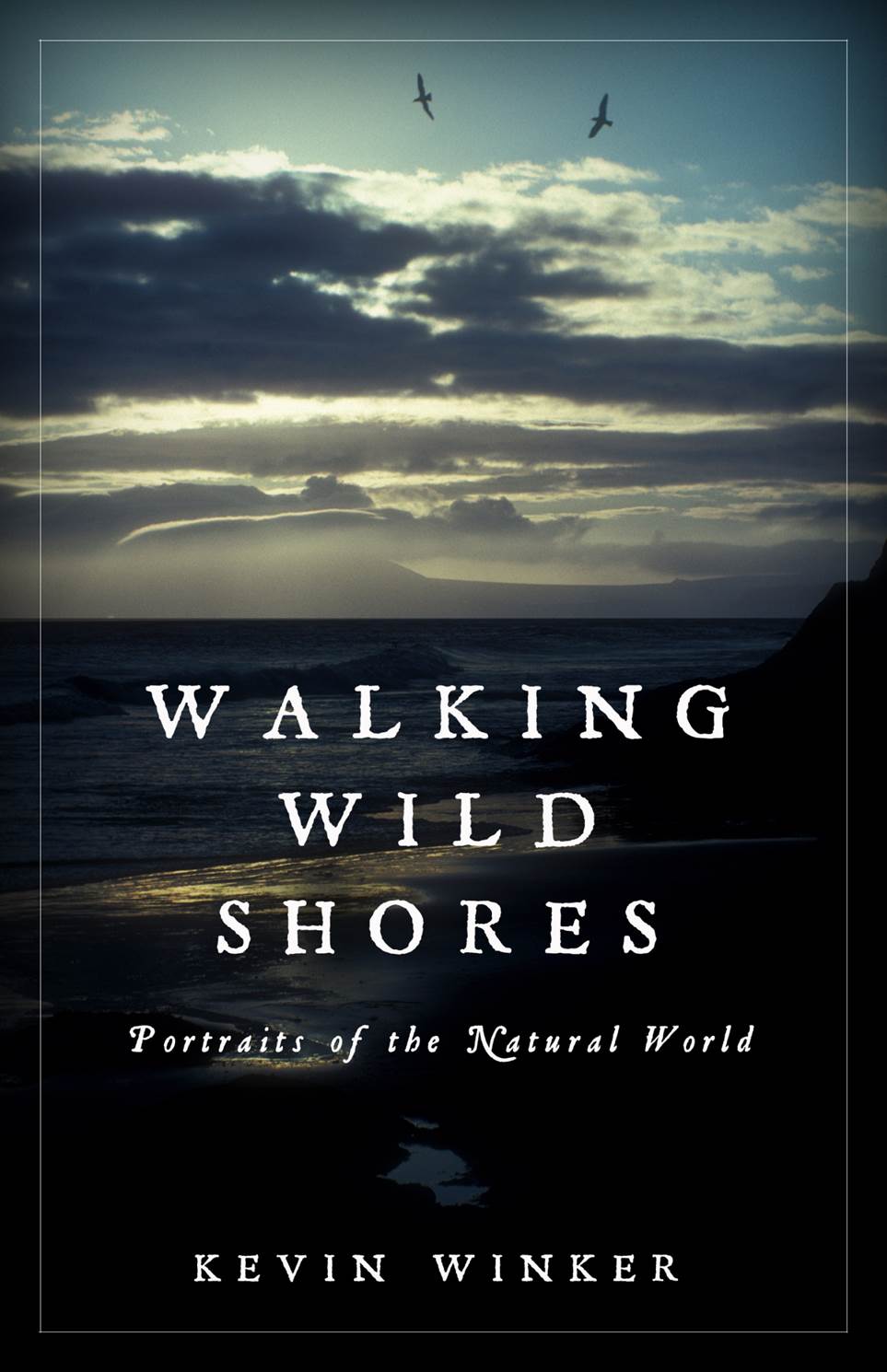
The book is out:Walking Wild Shores book cover
Walking Wild Shores: Portraits of the Natural World.

If you enjoy this blog, you might enjoy this book. It is based on the emailed stories sent out before this blog began.

Update: David James reviewed the book for the Daily News Miner. Now I can actually have one of those ridiculously brief review quotes that all the page-turners display:

“…damned good.” David A. James.

It is a great review. He summarizes it better than I could have.

Back during the publishing process an email came asking me whether there were any reviews that should be used in the book’s promotion. There were no formal reviews, but three were rattling around in my head:

“Please to come byack to Russia.” V. Putin
“Surprisingly little corncob; I actually enjoyed it.” Anonymous
“You write so well.” Author’s mother