Category Archives: Uncategorized

John H. Rappole (1946-2026)

John was a great teacher, mentor, and friend, so it was very sad to learn of his sudden death. A detailed obituary about John can be found here.

This is just some of the many memories that come tumbling out as I think about John and our long association.

I first learned about John from Dwain Warner, who had overseen John’s PhD research in the Sierra de Los Tuxtlas in southern Veracruz, Mexico. Not long after reading some of John’s papers about that work, I was able to go with Dwain and John Gerwin to Los Tuxtlas to do bird censuses (1982-83). That was an amazing trip; Dwain showed us a lot of Mexico. He went back up to Minnesota with Mario Ramos so Mario could finish his dissertation, leaving John Gerwin and I to carry on with bird censusing. In walking the back roads doing censuses, we met the herpetologist Dick Vogt, who worked at the nearby UNAM field station. One day he stopped and told us that he’d heard that John Rappole was in the Sierra de Santa Marta at a remote field site, and that if we wanted to we could all go in together and meet him. We did.

The site was indeed remote. The road from the small town of Catemaco in to the village of La Peninsula de Moreno was not really driveable with my Volkswagen Rabbit; the muffler got scraped off on some rocks, and we had to stop and walk in when we were blocked by a creek. Some kind people at La Peninsula pointed up the Rio Coxcoapan toward the study site, and we followed boot tracks in the mud on both sides of the river (we got a lot of wading in) to a site in pristine tropical rainforest. There, John Rappole and two students were running a grid of mist nets doing a study of wintering Wood Thrushes. We had a great conversation, and John R. invited John G. and I to stop by at his home in Kingsville, Texas on our way north in a month or two when our bird censusing was done. We did.
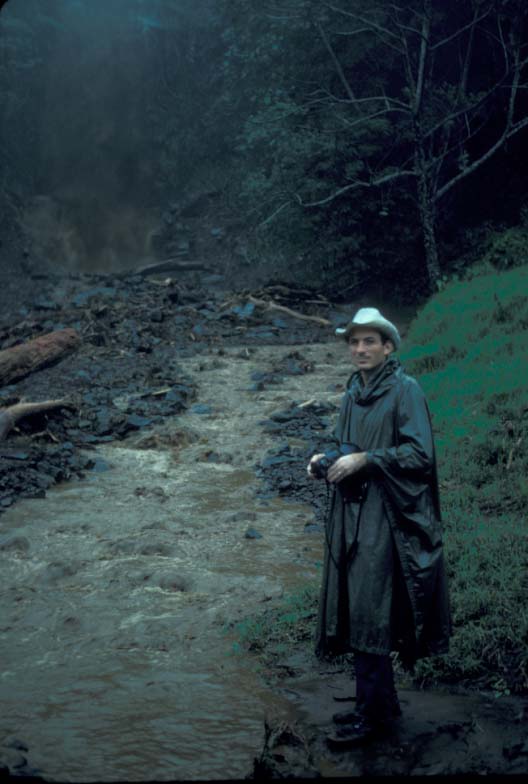
John Rappole during a norte in Los Tuxtlas

Back in Minnesota, I had the opportunity to get to know Mario Ramos as he worked on completing his dissertation. The Wood Thrush study was his and John’s, and between the two of them they talked me into coming down the next winter to work on it with them. That began a long and wonderful collaboration. That winter, I drove to Kingsville, then John and I drove the project’s World Wildlife Fund Chevy Blazer down to Los Tuxtlas, stopping in Xalapa to pick up Jacinto Hernandez, an INIREB employee under Mario’s supervision who was going to be working with us at the study site.

That first winter was a steep learning curve for me. I had not spent much time in rainforest before, and I did not know much Spanish. John set us up, showed us how to put radio transmitters on the birds and track them, and then went back to Kingsville. Jacinto and I carried on, and I knew I was hooked on studying migratory birds. John and Mario invited me to join them in Xalapa mid-winter for the second meeting of the Neotropical Ornithological Society (under its former name). Not only was it great to get to catch up with them about the study and other bird-related topics, I was able to meet many other ornithologists studying tropical birds.

On my way north later to get back to school, I stopped in Kingsville again and stayed with John, Bonnie, and the family for a day or two. We talked about my taking on the Wood Thrush project for a Masters thesis (I was still an undergrad), and that’s what we did. I would spend three more seasons on that project, with many other people, each time accompanied down to Los Tuxtlas by John to get us set up. John was a tireless engine of enthusiasm and field skills.
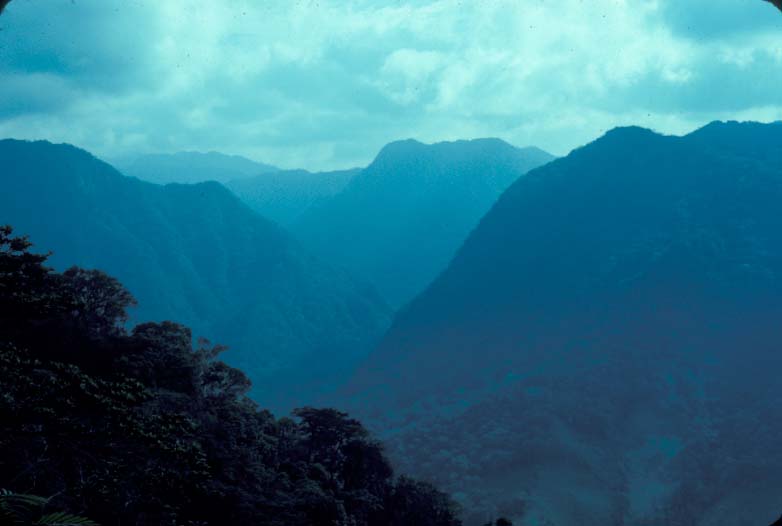
Valley of the Rio de Coxcoapan

Over that first season, John got us set up with a local pilot, Moices Estrada, to fly his small single-engine plane once a week or so to search for transmitter signals from floaters, nonterritorial Wood Thrushes. One day at La Peninsula John told me that when he had proposed the project he had wanted to buy an ultralight aircraft and fly that to find the signals of the transmitters that could no longer be found from the ground, even from the nearby peaks. His university turned him down, though, saying it was too risky. As I looked around the extremely rugged landscape, thickly forested, I remember thinking well, they were probably right. There was no place at all for emergency landings. I still use this as an example when telling people that, yes, while institutions can have an excessive amount of CYA policies that probably don’t really reduce risk (but do require increasing amounts of training and time), they can occasionally get things right.
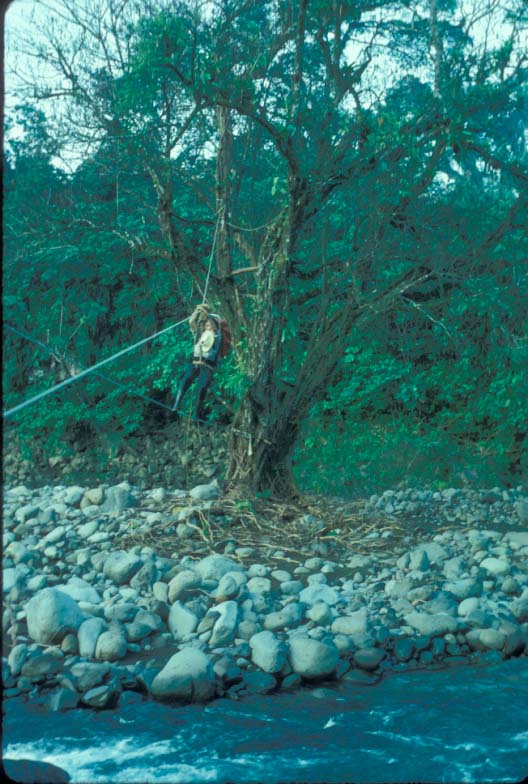
John Rappole testing the rope bridge used to cross the Coxcoapan to the study site during high water.

We published a series of papers together on the Wood Thrush project, and at the same time I was working on another project in Minnesota for my PhD. In the meantime, John had moved to the Smithsonian Institution’s Conservation & Research Center in Front Royal, Virginia. As I was completing my dissertation, John suggested that I apply to come and work there as a postdoc. It was a great idea, the project was funded, and Rose and I moved to Front Royal after defending our respective PhD dissertations. Soon enough I was back in Los Tuxtlas doing migratory stopover site work there.

One of the best things for me about Front Royal was that this was the first time John and I had been co-located for long periods, so we had a lot of time to talk about migration. John had an encyclopedic grasp of the migration literature. Those long, highly detailed, fruitful discussions were invaluable to me in integrating the ecology of migration (John’s greatest strength) with my other interests in avian diversity and the evolutionary processes causing it. I know John also appreciated our discussions.

This was at about the time email became commonplace, so after Rose and I moved to Alaska, John and I had long, ongoing correspondence, exchanging manuscript drafts for comments and keeping up with major developments in migration research. Fully 15 years after Rose and I moved here and after John and Bonnie had retired and moved to New York, John was an invaluable and eager participant in what I like to think of as a “Let’s get the band back together!” effort on a Los Tuxtlas data retrospective. We had talked about it, including with Dwain and Mario, as a possible long-term goal when we had been able to achieve decadal mist-net sampling in the 70s, 80s, 90s, and the 00s by stringing together a series of collaborative projects (the latter two with Patricia Escalante). Sadly, Dwain and Mario had passed away before we completed the writeup, but it sure was fun to work with John again. (https://peerj.com/articles/179/)

John was always moving forward. Unstoppable. Among our last emails, I learned that he was working on yet another book and that he had used preprints to get out some manuscripts that reviewers were not enthused about.

John will be greatly missed.
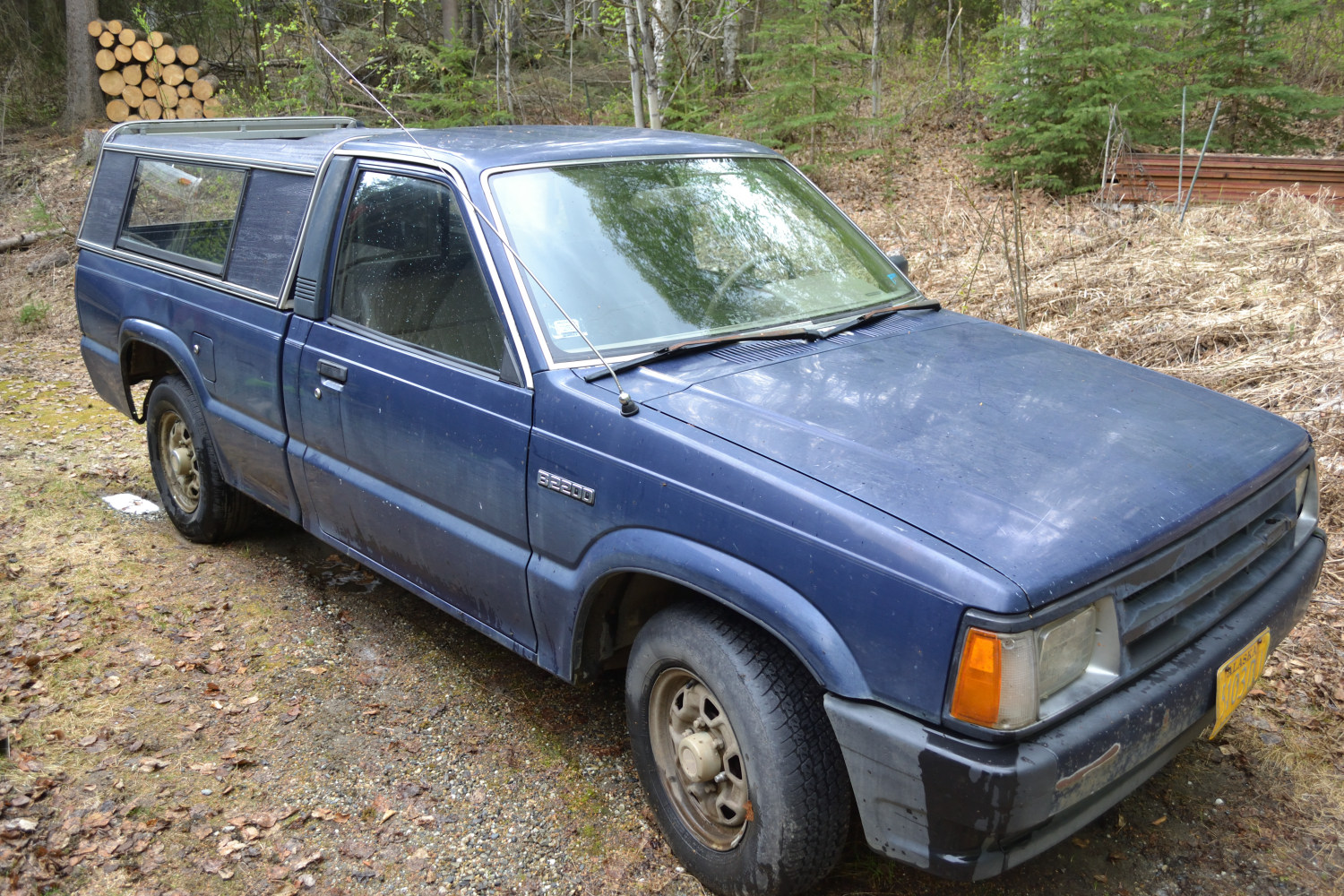
Old Blue

An era has passed. Back in 1995 I traded in my old Mazda B2000 pickup for a newer (1990) Mazda B2200. It was at a Saturn dealer of all places, and I felt like it was a good deal. That became my DC commuting vehicle—three-hour round trips daily. When we moved to Alaska in 1997 there was room in the 40-foot container with all our household goods for the pickup, so we loaded it on last. And it’s been a stalwart part of our Alaska lives since. Until now.

Old Blue

Continue reading

Guts

It began in January on a trip to Seattle. My guts did not feel right. It took awhile for the serious discomfort to go away, and I was not sure what was going on. I’d get periodic resurgences—a really uncomfortable feeling, like there was a baseball lodged in there that wasn’t moving.

Then it advanced a bit more, waxing and waning, and began to include pain. And then I remembered that this was not the first time. It was just different. Diverticulitis. I’d first had it in 2012, brought on by plant secondary compounds, like spicy lettuce leaves (e.g., arugula). That had gotten quite painful, and a trip to the emergency room sorted it out with antibiotics and a liquid diet graduating slowly back up to and through soft foods. Periodically I’d get a little ping to remind me, but I didn’t have another real case until this sort with its different feeling in 2024.

Continue reading

Passwords and petrified erasers

Alright, I’m going to rant a bit. There have been a lot of things going on, but small things can stick out of the churning maelstrom of activity.

I’ve written before about two-factor fuckery, the often needless application of high security for online accounts that really aren’t that important. A recent post on Xitter captures just how frustrated academics are with this crap:

(I disagree with the PowerPoint allotment, but the rest seems about right.)

Cory Doctorow coined the term ‘enshittification’ to describe the sort of platform decay we see with products like Google (e.g., here, and here). But I think it should be expanded to include the ongoing degradation of the entire online experience.

When I am working, actually interacting with UAF’s purchased software, some algorithm monkey somewhere just pulls the plug, stops everything, and makes me prove once again that I’m me. It’s infuriating. So I just leave my accounts open, always, on every machine I use during the day (as many as four). So secure.

On my new laptop, which of course debuts a ridiculous new look and feel of an operating system that takes weeks to figure out how to fix so it works the way I want, I made the stupidest user mistake. I let “my institution” have a crack at it while I set it up. Oh, god. Now at random times it makes me create a new PIN just to fire it up. And I can’t extend the idle time beyond 15 minutes without satisfying some other ridiculous algorithm monkey. I want to take a sledgehammer to it. How am I supposed to remember mildly different PINs across days and weeks when hopping among different computers to do different things?

And that’s where the passwords come in. I have a book of them, of course, and it’s one of the few things I use pencil for. I write cryptic reminders of what a password for a thing is—sometimes so cryptic even I can’t figure it out. Then, when I have to change one, I have to find an eraser that isn’t petrified. I swear, I have access to dozens of pencils, but not one of the damned things is young enough to have any life left in its eraser. So I have to go looking for one of the two erasers that I own. I treasure these erasers. They are an excellent reminder of how ridiculous the online experience has become. Not only do I have to prove that I’m me, I have to find an object in the physical world to do it effectively.

And that reminds me that I’m still a curmudgeon when it comes to smart phones. What a great tool— when I am traveling. So I rarely carry one. But I teach in a “smart” classroom, and to get onto the computer there I, yes, have to prove that I am me, twice: once with my supersecret password and once again with this real-world object that I am supposed to be carrying. You guessed it—I often forget to carry my phone when I am headed off to class. Sledgehammers again come to mind. The computational tail is wagging the dog. I just want a tool that tells all the machines I have to work with, “Kiss the ring, fucker!”

Alright. I needed to get that off my chest. There are calming things going on, too. Yesterday as I sat in my office at home working on a really interesting paper, a gorgeous cross fox loped across the wooded slope behind the house. (A cross fox is a melanistic color morph of a red fox, and they are surprisingly common in this neighborhood.) And yesterday evening, Rose spotted a beautiful cow moose at the edge of the backyard. This moose is heavily pregnant. As we watched her, her calf from last year came out of the woods to join her. We haven’t seen these two before. They proceeded to paw up and eat choice pieces of the compost we’d dumped on the compost pile throughout the winter. I think it’s only the second time I can remember moose doing that. I’ll bet onion and garlic skins, broccoli and asparagus stems, and old flowers taste pretty good after a winter of sticks.

Finally, after dark, I made sure to refill the bird feeder. The pigpolls have been pretty nearly emptying it every day. As I stepped out, a night squirrel leaped off the feeder (northern flying squirrel). Life is good after all.

P.S. The good feelings did not last long. After posting this, I noticed that it didn’t send me an email, as it usually does. Oh, what befuckery hath software upgrades wrought? I have no control over these systems’ needs to be constantly upgraded, and they not infrequently break something that used to work perfectly. I didn’t have time to try the different fixes The Google recommended, so I set it aside for a week. Then I wasted too much time on a Sunday going through an extremely arcane process to carve another email solution. It worked, but cripes — upgrades just as often create substantial downgrades. (On our analysis computers at school we have one rule: NEVER LET IT UPGRADE ANYTHING. It works pretty well. Though I did that with one of my own laptops once and after a few years it experienced catastrophic failure.)

The Winter Feast

The eggnog was chilled and the taters all mashed,
The gravy de-lumped and the roast nicely slashed.
Cranberries, stuffing, candies, and booze—
All of the goodies a body could choose—
Were carefully laid on a table so large,
It usually served as a small river barge.

Although drooling, they controlled themselves,
Grinning sly little grins like mischievous elves;
The splendiferous spread was not yet complete,
Without that one dish, they just couldn’t eat.

What was this one dish for which they all waited?
The dish that all loved, and nobody hated?
Why, that wonderful taste treat, that olde Christmas musto:
Fresh-baked, angelic, delicious Bread Crusto!
Who minded if stockings were hung up with care
If there wasn’t that holiday Crusto to share?

When it finally was ready, loudly they cried,
Then they all laughed, and babbled, and sighed.
And amid all the feasting, and yakking, and mirth,
The entire group felt at peace with the earth.

When feasting was over and frenzy all done,
The last turkey downed with the last tasty bun,
They sat around playing with fun Christmas treasures,
All those marvelous doodads that brought many pleasures.

And what with the playing and washing the dishes,
Some sought to satisfy all of their wishes,
For what with the play, and the work, and the rest,
It didn’t take long for those treats to digest.
And though they had eaten until they could burst,
There was still a bunch left of the best and the worst.

There were crackers and cheeses, and veggies and dips,
There were seafoods and landfoods, and fruit-flavored flips,
There were candies and cookies, and schnitzels and strudels,
There were popcorn and peanuts, and oddly shaped noodles;
There were chocolates and toffies, and Aunt Mabel’s beaners,
There were fruitcakes with goobers and short pickled wieners.

But none could compare with the leftover mound
Of that holiday treat that kept going around,
That treat of which making enough was a musto—
Yes, there was still just a little Bread Crusto.

So they nibbled and snacked on the slices and crumbs,
Ignoring migration of fat to their bums,
For wasn’t it Christmas, that big, day-long feast?
And besides, it was only just one little piece…

And yes, true, the mounds had taken a beating.
And yes, true, here we all still were eating,
But we find it much easier to have a good time,
Consuming and snorting like gluttonous swine.

Merry Christmas (oink oink)

(Apologies to Dr. Seuss. I wrote this over 30 years ago and had forgotten all about it until my sister Katy handed me a copy she had transcribed. I’ll post a Bread Crusto recipe soon.)